
How does abstract art impact workplace focus and performance?
Abstract art significantly influences workplace focus and employee performance through visual priming.
- Art acts as a constant stream of information that influences mental states and decisions.
- The Priming Effect shows how visual stimuli affect responses and emotional readiness for tasks.
- Positive imagery fosters confidence, while chaotic art creates stress and confusion in the workplace.
- Choosing art that promotes flow rather than chaos enhances concentration and productivity.
Audience & Tone Analysis

Target Audience: Business owners, executives, and office managers who have some basic understanding of Feng Shui (energy flow) and want to improve their workspace for better performance. They are doubtful of purely "mystical" advice and want psychological proof for design choices.
Tone: Expert, insightful, and professional. The voice should connect ancient Pictorial Feng Shui wisdom with modern behavioral psychology. It should be instructional yet collaborative (using "We" instead of "I"), positioning the writer as a strategic partner in the reader's business success.
Visual Priming: Hurting Focus
We often think of office art as something we add last, a final decorative touch applied once the serious work of building design and hiring is done. This is a big mistake. In the competitive world of modern business, art is not just decoration; it is a constant, never-ending stream of information fed directly to the unconscious mind. Every painting, print, and sculpture in your workspace acts as a visual prime, setting the emotional and mental stage for every decision we make.
When we hang a piece of art, we are basically programming the environment. If the source code of that program is chaotic, depressing, or aggressive, the output from your team will show those same qualities. This phenomenon is known as Visual Priming. It controls how your team processes information, handles stress, and approaches risk.
In this analysis, we connect the ancient principles of Pictorial Feng Shui with the scientific methods of Office Art Psychology. We move beyond just liking how art looks to understanding the real impact of imagery on revenue and focus. We must accept a hard truth: what you see on your walls is likely controlling how your team thinks, often causing anxiety or hopelessness without anyone knowing the source. It is time to examine your visual environment.
Subconscious Influence Science
To understand why a painting can affect a quarterly report, we must look at how the human brain works. We often pride ourselves on being logical, data-driven executives, yet most of our mental processing happens below conscious awareness. This is where the environment has its power.
Understanding Priming Effects
The Priming Effect is a psychological phenomenon where exposure to one stimulus influences a response to a later stimulus, without conscious guidance or intention. In a corporate setting, this means the visual input a team member receives while walking down the hallway primes their brain for the meeting they are about to attend.
The brain processes visual data much faster than text. Long before an employee has opened their laptop or read the agenda for the morning briefing, their brain has already processed the artwork hanging behind the receptionist's desk or the large canvas in the conference room. If that visual data suggests conflict or shortage, the brain shifts into a subtle state of defense.
Recent research in environmental psychology supports what Feng Shui practitioners have known for centuries: our surroundings are not passive backdrops. They are active participants in our mental state. When we expose the brain to specific visual cues, we are effectively pre-loading a psychological state. A 2026 understanding of workspace dynamics accepts that we cannot separate the worker from the environment; they are a unified system.
The Psychological Feedback Loop
Office Art Psychology functions as a continuous feedback loop. Positive, organized imagery reinforces confidence and clarity, while negative or chaotic imagery reinforces stress and confusion. This loop never stops because the art is always there, broadcasting its signal 24/7.
We must throw away the idea that "neutral" art exists. In the simple language of the unconscious, an image either adds to the flow of mental energy or creates resistance. There is no middle ground. When we place an image in a line of sight, we are either reducing the mental load—making it easier for the brain to focus—or we are increasing it by forcing the brain to filter out visual noise.
This feedback loop builds up over time. A single glance at a chaotic painting might not ruin a day, but five years of sitting across from a depiction of disorder creates a baseline of low-level anxiety that spreads through the company culture. By understanding this loop, we can step in and create spaces that actively support high-performance states rather than quietly undermining them.
Chaos vs. Flow
One of the most common myths in corporate design is that "modern" equals "good." We frequently see offices decorated with expensive, high-concept abstract art that, while monetarily valuable, is psychologically harmful. This brings us to the critical difference between Chaos and Flow.
High Art, High Anxiety
We have all walked into a high-end boardroom or a tech startup lobby and been greeted by a massive canvas that looks like an explosion in a paint factory. These pieces often feature jagged lines, sharp geometric clashes, and aggressive "splatter" techniques. While the art market may reward this as "dynamic" or "edgy," the primitive brain interprets it differently.
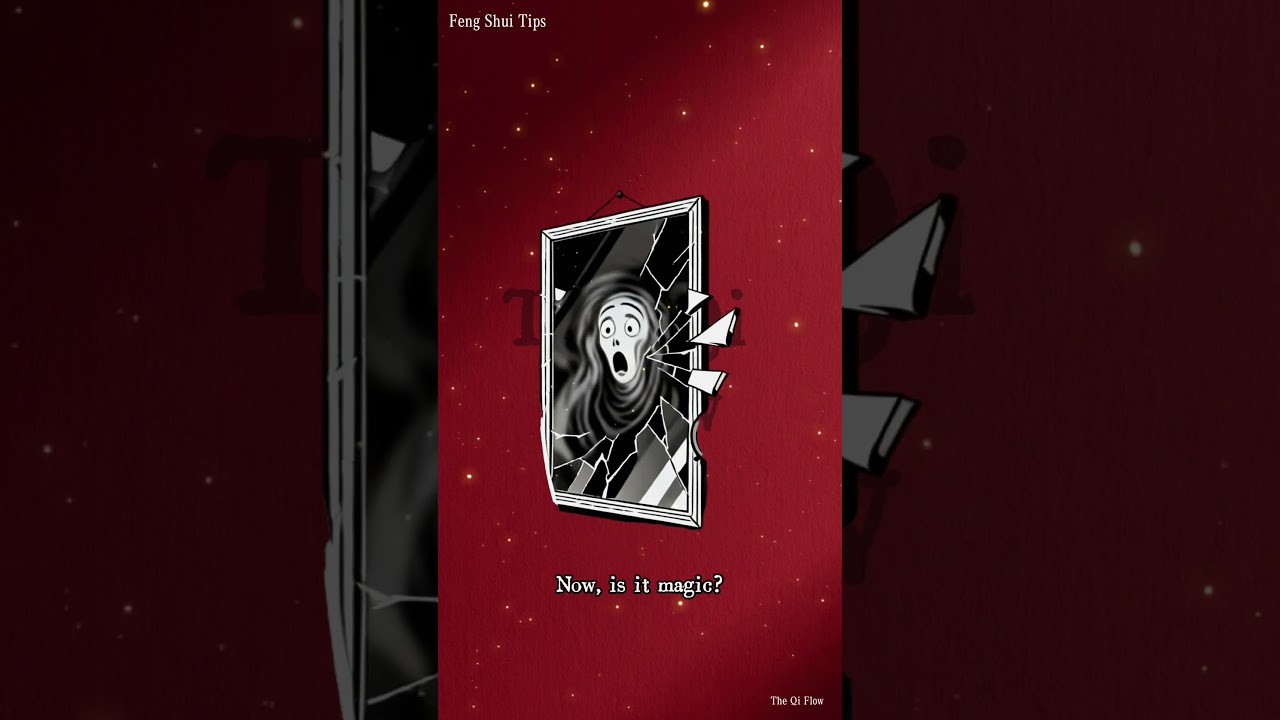
From an evolutionary standpoint, jagged lines, sharp angles, and chaotic visual patterns signal threat. They copy the visual signature of shattered glass, thorns, or structural collapse. When the brain encounters this visual data, it triggers a low-level fight-or-flight response. The amygdala activates, and cortisol levels spike.
In a business context, this translates to a team that is quietly on edge. We mistake this tension for "high energy," but it is actually "high anxiety." Employees working in the shadow of chaotic abstract art are visually primed for conflict and confusion. Their unconscious is busy processing a visual threat, leaving fewer mental resources available for complex problem solving or empathetic negotiation. We effectively hurt our own focus by surrounding ourselves with visual noise that looks like danger.
Pictorial Feng Shui
This psychological reaction aligns perfectly with the principles of Pictorial Feng Shui. In Feng Shui, art that resembles an explosion, sharp shrapnel, or confused, tangled lines generates visual "Sha Qi," or killing energy. This energy cuts through the harmonious atmosphere necessary for productive work.
Compare this with the concept of "Flow." Art that uses curves, harmonious transitions, and organized composition copies the patterns found in nature. Biophilic design elements—gentle rivers, rolling hills, or organized geometric patterns—lower blood pressure and heart rate.
We must prioritize Flow over Chaos. When the eye can move smoothly across a piece of art without getting caught on aggressive spikes or confused by visual disorder, the mind follows suit. This promotes a state of "Flow" in work tasks, allowing for deep concentration and sustained effort. In 2026, where attention is the scarcest resource, we cannot afford to waste it on processing visual Sha Qi.
The Sinking Ship Syndrome
Story matters. Even in a professional setting where we deal with spreadsheets and KPIs, the human mind is wired for story. The stories we tell on our walls become the stories we live out in our business. This brings us to a strict rule in Office Art Psychology: the depiction of tragedy.
Tragedy in Boardrooms
There is a specific rule we must enforce regarding story art: The "Sinking Ship" rule. It is surprisingly common to find prints of famous maritime disasters, historical battles, or stormy seas in executive offices. These are often chosen for their grandeur or historical significance. However, in the realm of Pictorial Feng Shui and unconscious priming, these images are poison.
A painting of a sinking ship, no matter how beautifully painted by a master artist, symbolizes failure, the loss of wealth, and an uncontrollable disaster. Hanging such an image in a place of business is a symbolic surrender to catastrophe. It visually primes the unconscious to expect that despite our best efforts, the "ship" (the company) is destined to go down.
We must also extend this watchfulness to other forms of negative imagery. We have put together a comparison guide to help you examine your current story art:
| Art to Avoid (The Saboteurs) | Art to Embrace (The Enhancers) |
|---|---|
| Sinking Ships / Storms: Symbolizes financial loss, disaster, and lack of control. | Calm Waters / Flowing Rivers: Symbolizes clarity, smooth operations, and wealth accumulation. |
| Withered / Dead Trees: Represents stagnation, lack of growth, and the end of a cycle. | Lush Forests / Bamboo: Represents vitality, resilience, and upward growth. |
| Sunsets: Signifies the end of glory, decline, and the coming darkness. | Sunrises: Represents new beginnings, opportunity, and rising potential. |
| Predators Attacking Prey: Creates a hostile, cutthroat work culture. | Pack Animals / Herds: Symbolizes collaboration, teamwork, and unified direction. |
Psychology of Pessimism
The danger of negative imagery lies in the psychology of pessimism. Constant exposure to images of decline (sunsets) or danger (storms) visually primes the team for "damage control" rather than "growth." When an executive stares at a withered tree on the wall while thinking about a merger, their unconscious is accessing brain pathways associated with scarcity and death.
This creates an atmosphere of coming doom. It quietly shifts the corporate culture from one of innovation to one of survival. We want our teams to feel that they are at the beginning of a great journey, not the end of one. Therefore, every image on the wall must point toward life, growth, and stability. Historical value does not cancel psychological impact; a masterpiece of a tragedy is still a tragedy.
Directional Art Flow
Once we have removed chaotic and negative imagery, we must look at the technical placement of the art that remains. This is where Pictorial Feng Shui becomes practical. The direction of art—specifically images involving motion—can symbolically control the flow of wealth and talent in your organization.
Horse Direction Success
The image of the horse is a classic staple in many offices, representing speed, power, and endurance. In Feng Shui, the "Success Horse" is a powerful symbol. However, the placement is critical.
We often see a fatal error where the horses in a painting are shown running toward a window or a door. The rule is absolute: The horses must run into the room, into the office, or toward the executive's desk.
If the horses are running toward the exit, we are symbolically signaling that resources, talent, and success are galloping away from the company. We want the energy of success to arrive, not depart. When hanging art of galloping horses, pause and check the direction of movement. They should be bringing opportunities to you, not carrying them out to your competitors.
Water and Wealth
This directional logic applies with equal force to depictions of water. In Feng Shui, water represents wealth and cash flow. A painting of a waterfall, a river, or a stream is a powerful enhancer for revenue, but only if the water appears to flow into the space.
If you have a large landscape of a river hanging on a wall, and the perspective suggests the river is flowing toward the office door, you are symbolically flushing revenue out of the building. We must position these pieces so that the water flows toward the center of the room, pooling and accumulating. This visual prime reinforces the concept of wealth retention and accumulation. It aligns the unconscious focus on gathering resources rather than losing them.
The Intuition Audit
We have discussed the theory and the rules, but the most powerful tool available to you is your own intuition. You do not need a degree in psychology to identify a problem in your environment; you simply need to listen to the data your body provides. We call this the Intuition Audit.
The Blink Test
We recommend a simple, cost-free procedure to clean your visual environment. We call it the "Blink Test."
- Stand outside the entrance of your office or conference room.
- Close your eyes and take a deep breath to reset your visual palette.
- Step into the room and immediately open your eyes.
- Focus on the very first piece of art you see.
- Note the very first emotion or physical sensation you feel. Do not overthink it.
If the immediate feeling is "busy," "aggressive," "sad," "confusing," or "heavy," the art must go. It does not matter if it cost a fortune or if it was a gift. If your gut reaction—your intuition—signals discomfort, that is the Priming Effect in action. Your unconscious is picking up on the aggression or stagnation faster than your logical brain can justify the price tag. Trust this data.
Replacing the Saboteurs
Once you have identified the "Saboteurs"—the chaotic abstracts, the sinking ships, the horses running out the door—you must replace them. This is not about filling space; it is about strategic selection.
Swap the chaos for "Enhancers." Look for biophilic designs that bring the outdoors in. Look for organized geometrics that imply structure and stability. Make sure that every story on the wall tells a tale of growth, arrival, and vitality. By cleaning the environment of visual toxins, we clear the mental bandwidth of the team, allowing them to focus on the work that matters.
Conclusion: Selecting for Success
We must stop viewing office art as mere decoration. It is a strategic business tool that operates on the psychological and energetic levels of your organization. By applying the principles of Visual Priming and Pictorial Feng Shui, we can transform a workspace from a source of subtle resistance into a generator of momentum.
Remember the core principles: remove visual chaos to reduce anxiety, select the narrative to avoid symbols of failure like sinking ships, and control the directional flow of motion to retain wealth. When we align our visual environment with our business goals, we create a space that supports focus, clarity, and sustainable growth. The walls are talking; make sure they are saying the right things.

In 2027, the 5 Yellow flies north.
Every year the stars move, and your home changes with them. The 2027 almanac shows exactly where they land: the sector to activate, the four not to disturb, and the month that needs the most care. Bundled with Sifu Xion’s complete guide to reading your home.
Get the Guide + 2027 Almanac — $19



0 comments