By Xion

A Practical Guide to Feng Shui Dowsing: Discover and Balance Your Home's Energy

Have you ever walked into a room and felt that something was just "not right"? Or maybe you have trouble sleeping and feel tired all the time, even though you have a comfortable bed and a quiet bedroom? These feelings happen to many people, and they often point to hidden energies in our surroundings that we can't see but can definitely feel. Feng shui dowsing is a real, hands-on way to explore and map these energies.

This practice helps you use your own natural instincts to find sources of negative energy, often called Geopathic Stress. This guide will give you a clear, step-by-step process to start using dowsing rods. You will learn how to discover these hidden energies and find the best locations for important areas in your home, starting with the place where you rest and recharge: your bed.

Dowsing and Feng Shui

figure-1

To understand feng shui dowsing, we must first understand its two parts. Dowsing is the ancient practice of using a tool, such as a forked stick or metal rods, to connect with a deeper level of awareness about our environment. It's a way of asking questions and getting physical, visible answers from a tool that makes our own subtle feelings stronger.

The connection to Feng Shui is natural and direct. Feng Shui is the art and science of arranging living spaces to improve the flow of life force energy, or Qi. Dowsing, therefore, becomes a special tool in the Feng Shui practitioner's toolkit. It allows us to "feel" or map the energy landscape of a property, specifically to find areas of harmful earth energies that more traditional methods might not detect as precisely.

Your Natural Bridge

The way dowsing works is often explained by something called the ideomotor response. This is a scientifically recognized event where tiny, unconscious muscle movements happen in response to our thoughts, questions, or feelings. When holding dowsing rods, these small movements are made bigger, causing the rods to swing open or cross.

It is important to understand that the rods themselves are not magical. They are simply amplifiers. The power is not in the tool; it is in you. The rods act as a bridge between your conscious mind and your natural, subconscious awareness of the environment. They translate what you already sense on a subtle level into a clear, visible signal.

Sensing Qi Energy

In Feng Shui, we work with the concept of Qi, the vital energy that flows through all things, and Sha Qi, which is negative or harmful energy. Dowsing is a particularly effective technique for detecting a specific and powerful form of Sha Qi known as Geopathic Stress. This type of energy comes from disturbances within the earth itself.

  • Dowsing: The practice of searching for things, such as underground water, mineral deposits, or energy fields, using a tool that amplifies the user's subtle perceptions and natural knowledge.
  • Geopathic Stress: This term refers to harmful or draining energy believed to come from the Earth. It is often associated with underground water streams, geological fault lines, mineral concentrations, and specific earth grid lines.
  • Feng Shui: The ancient Chinese art of creating balance and harmony between individuals and their environment by managing the flow of Qi.

Your Essential Toolkit

Getting started with feng shui dowsing doesn't require an extensive or expensive set of tools. The focus is on simplicity and function. For our purposes, the most practical and effective tool is a pair of L-shaped dowsing rods.

These rods are typically made from conductive metals like copper or brass. The material choice is significant as it relates to the body's own electrical and energy systems, but the most important factor is that they are well-balanced and can swing freely. When selecting rods, look for a pair with comfortable handles or sleeves that allow the long part of the 'L' to rotate without friction. Treat your tools with respect; they are instruments for sensitive work, not toys.

Choosing L-Rods

While other dowsing tools exist, such as pendulums and Y-rods, we recommend L-rods for Feng Shui applications. Pendulums are excellent for asking "yes/no" questions or checking the energy of a small object, and Y-rods are traditionally used for finding water. However, L-rods are unmatched for the work of mapping spaces. Their ability to point, cross, and open provides a more dynamic range of signals, which is ideal for tracing energy lines and scanning entire rooms or properties.

Handling Your Rods

Your posture and grip are fundamental to getting accurate results. Before you even begin asking questions, practice walking with your rods to get a feel for their balance and movement.

  • Step 1: Hold one rod in each hand. The shorter part of the 'L' is your handle, and the long part should be parallel to the floor, pointing straight ahead of you.
  • Step 2: Maintain a light grip. Do not clench your fists. The rods need to be loose enough to swing freely in response to subtle movements. Imagine holding a small bird—firm enough so it doesn't fly away, but gentle enough not to harm it.
  • Step 3: Tuck your elbows in close to your sides. This creates a stable anchor point and prevents your arms from swaying, which could give false readings.
  • Step 4: Walk slowly and carefully. Find a neutral space, perhaps a hallway or open room, and simply walk back and forth. Notice how the rods behave. Get used to their feel before you begin the calibration process.

Accelerate your success in the Year of the Horse with this "Unstoppable Spirit".

Shop Now →
Unstoppable spirit solid copper horse statue – metal element cure for leadership authority & perseverance

Unstoppable spirit solid copper horse statue – metal element cure for leadership authority & perseverance

The Core Calibration

This is the most important step in learning to dowse for Feng Shui. Calibration is the process of programming your tools by establishing a clear, personal, and consistent communication system. You are essentially creating a language between your subconscious mind and the physical movement of the rods. Skipping this step is like trying to have a conversation without first agreeing on what words mean. This process moves beyond a generic "yes/no" to establish signals specific to Feng Shui energies.

Calibration Steps

  1. Find a Neutral State: Before beginning, stand quietly in a calm space. Take three deep breaths, breathing in through your nose and breathing out slowly through your mouth. Release any expectations or worries about the outcome. Your goal is to be a clear and neutral observer.

  2. Establish the "Ready" Position: Hold the rods in the correct starting position as practiced earlier. They should be parallel to each other and pointing forward, about shoulder-width apart. This is your neutral, or "search," position.

  3. Program "Yes": Hold the rods in the ready position and ask a simple question to which you know the answer is definitely "yes." For example, say aloud or in your mind, "Is my name [Your Name]?" As you ask, state the command, "Show me 'Yes'." Pay close attention to how the rods move. For many people, a "Yes" signal is the rods swinging open, away from each other. Whatever the movement is, acknowledge it. This is your 'Yes' signal. Repeat the question and command a few times until the response is consistent and clear.

  4. Program "No": Now, do the opposite. Ask a question you know is false, such as, "Is my name Bartholomew?" State the command, "Show me 'No'." Observe the movement. A common "No" signal is the rods crossing over each other. This is your 'No' signal. Practice this until the response feels definite and repeatable.

  5. Program for Feng Shui Energies: This is where we create unique signals for our specific work.

    • For Sheng Qi (Positive Energy): Close your eyes and think of something that fills you with a feeling of pure joy, health, and vitality. It could be the memory of a beautiful natural landscape, the face of a loved one, or the feeling of a personal achievement. Immerse yourself in this positive feeling. Then, with rods in the ready position, ask, "Show me the signal for beneficial, life-enhancing energy (Sheng Qi)." Note the response. It might be similar to your "Yes" signal (opening wide) but often feels stronger or more expansive.
    • For Sha Qi (Negative Energy): Next, bring to mind a time you felt ill, drained, or were in an environment that felt heavy and oppressive. Recall that physical sensation of being unwell or depleted. Now, ask the rods, "Show me the signal for harmful, draining energy (Sha Qi)." This response should be different from your "No." For most dowsers, this is a very definite crossing of the rods, sometimes so forcefully they hit your chest. This is the primary signal you will be looking for when scanning for Geopathic Stress.

Detecting Geopathic Stress

Now that you have calibrated your tools, you can begin the practical work of diagnosing your home. One of the most powerful applications of feng shui dowsing is identifying lines of Geopathic Stress. These are invisible lines of energy that can negatively impact the health and well-being of anyone living or working above them for extended periods.

Preparation and Intention

Your success in dowsing is directly related to the clarity of your intention. Before you begin, take a moment to set a clear purpose for your work.

First, obtain or draw a simple floor plan of the room or the entire house you intend to scan. It doesn't need to be an architectural blueprint; a basic, to-scale sketch will suffice. This will be your map for marking your findings.

Next, hold your rods and state your intention clearly, either aloud or in your mind. A powerful intention would be: "My intention is to accurately find and identify any lines of Geopathic Stress that are negatively impacting the health and well-being of the occupants of this home." This focuses your mind and directs your natural senses toward a specific goal.

The Scanning Process

With your floor plan ready and your intention set, you can begin scanning the space. The method is systematic, ensuring you cover the entire area thoroughly.

  1. Start at the Entrance: Begin at the main doorway into the room you are scanning. Stand for a moment, take a breath, and hold your rods in the "Ready" position.

  2. Walk Slowly: Begin to walk in slow, careful, parallel lines across the room. Imagine you are mowing a lawn or vacuuming a carpet, ensuring each pass slightly overlaps the last. This creates a grid pattern that covers the entire floor space. Your pace should be natural and unhurried.

  3. Observe the Rods: As you walk, maintain your focus on your intention. Keep your eyes gently on the rods, watching for your pre-programmed "Sha Qi" signal—the rods crossing.

  4. Mark the Spot: When the rods cross, stop immediately. You have likely encountered the edge of a Geopathic Stress line. Acknowledge the signal. You can mark this spot on the floor with a small piece of removable masking tape and make a corresponding mark on your floor plan.

  5. Find the Other Edge: To determine the width of the line, take one step backward. The rods should uncross and return to the "Ready" position. Now, slowly step forward again to confirm the exact point where the signal begins. Once confirmed, continue walking forward across the line. At some point, the rods will uncross and open back up to the "Ready" position. Stop. This is the other side of the line. Mark this second point on the floor and on your plan. You now have the width of the stress line.

  6. Trace the Line: A single point isn't enough; you need to find the line's direction. Go to another part of the room, several feet away from your first set of marks, and repeat the grid-walking process. When you find the line again, mark its entry and exit points. By connecting these two sets of findings on your floor plan, you can draw the path of the Geopathic Stress line as it moves through the room.

figure-2

  1. Mark Your Floor Plan: Carefully draw the lines you have discovered onto your floor plan. Note their width and the direction they travel. You may find multiple lines, some wider or stronger than others. Map them all.

Finding Your Sleep Spot

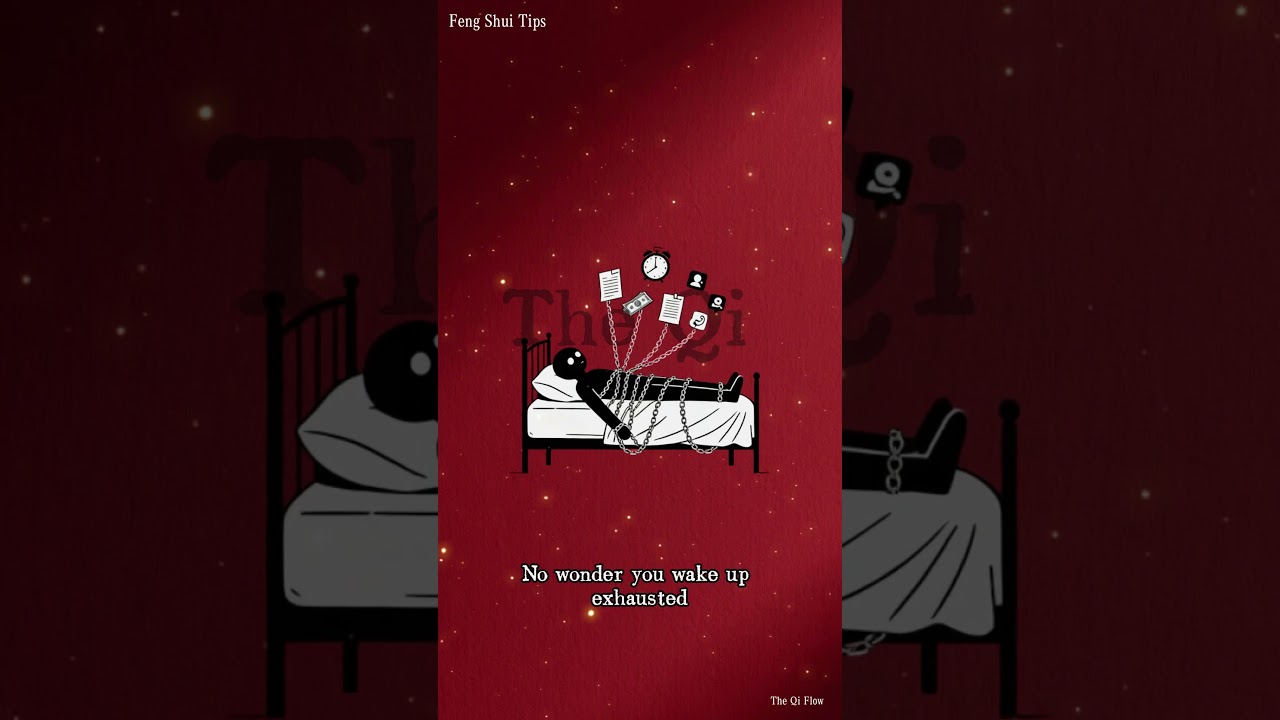
The most critical application of this work is ensuring your bed is in an energetically clear and supportive location. We spend roughly one-third of our lives sleeping, a passive and receptive state where our bodies perform essential repair and regeneration. Continuous exposure to Geopathic Stress during this vulnerable time can disrupt these processes, leading to poor sleep, chronic fatigue, and other health challenges.

In our own practice, we worked with a client who suffered from years of chronic restlessness and never felt truly rested. By dowsing their bedroom, we discovered a wide Geopathic Stress line, nearly four feet across, running directly through the middle of their bed, right where their torso would be. We marked the line on the floor and helped them reposition the bed just three feet to the left, into a dowsed "neutral" zone. Within a week, they reported a dramatic improvement in sleep depth and a newfound sense of feeling refreshed upon waking. This demonstrates the powerful and immediate impact of aligning your rest with the earth's supportive energies.

The importance of quality sleep cannot be overstated. Health authorities like the CDC consistently recommend 7-9 hours of quality sleep for adults, linking insufficient sleep to a range of chronic health issues. Creating an optimal sleep environment is a cornerstone of well-being, and feng shui dowsing is a key technique to achieve this.

Why Location Matters

When you are asleep, your body's energy defenses are lowered. You are stationary for 6-8 hours, making you far more susceptible to any persistent energy influences in your environment. If your bed is placed over a Geopathic Stress line, your body is essentially being bombarded by draining energy throughout the night, forcing it to work harder just to maintain balance, rather than focusing on deep rest and healing.

Dowsing for Sleep

  1. Overlay Your Bed: Take your completed floor plan with the Geopathic Stress lines marked on it. Now, draw your bed's current position and size to scale on the map. Is your bed—especially the area where your head and torso rest—located on one of these lines?

  2. If "Yes": Moving your bed is a high priority. The goal is to move it completely off the stress line. Even shifting it a few feet can make a world of difference.

  3. If "No": Congratulations, your bed is not on a major stress line. However, you can still use dowsing to refine its placement and find the absolute best spot in the room.

  4. Finding "Sheng Qi": Stand in the bedroom with your rods. Set a new intention: "Show me the most beneficial, healthy, and supportive location for my bed in this room." Hold your rods in the "Ready" position and begin to scan the available areas where the bed could physically fit, according to good Feng Shui principles (e.g., with a solid headboard wall, in a command position). Watch for your pre-programmed "Sheng Qi" signal. You are looking for a spot where the rods open wide and feel vibrant. This is your personal "power spot" for rest and rejuvenation.

Bring "Daily Wealth" and guard your prosperity with this Pixiu Fountain.

Shop Now →
Feng shui pixiu water fountain | antique-style wealth & good luck ornament for office desk & home

Feng shui pixiu water fountain | antique-style wealth & good luck ornament for office desk & home

Dowsing vs. Luo Pan

It is essential for the aspiring practitioner to understand that dowsing is one tool among many. It does not replace the foundational instruments of classical Feng Shui, such as the Luo Pan. Thinking that dowsing is all you need is like a carpenter deciding a hammer is the only tool required to build a house. Both dowsing rods and the Luo Pan have distinct and complementary roles.

The Luo Pan is an analytical and mathematical tool. It is a highly precise magnetic compass embedded within a series of concentric rings containing complex Feng Shui formulas. Its purpose is to determine exact orientation, map the Ba Gua of a property, and calculate the time-based energies of systems like Flying Stars.

Dowsing, by contrast, is a natural and sensory tool. It is used to feel the qualitative nature of the energy in a space. It answers questions the Luo Pan cannot, such as "Is this corner healthy?" or "Where does this underground stream run?"

A Complementary Toolkit

A master practitioner uses all available senses and tools. The Luo Pan can be seen as the "map and compass," providing the structure, direction, and mathematical data for a Feng Shui analysis. The dowsing rods are the "geiger counter" or "metal detector" for energy, allowing you to investigate the subtle, invisible influences on the ground. Together, they provide a complete picture. The Luo Pan might tell you that a certain sector is auspicious, but dowsing can then pinpoint the single best spot within that sector for a desk or chair.

Feature Feng Shui Dowsing Rods Traditional Luo Pan (Compass)
Primary Use Sensing subtle earth energies (Geopathic Stress), water, and Qi quality. Determining precise magnetic direction, applying Ba Gua and Flying Star formulas.
Nature of Tool Natural / Sensing Analytical / Calculating
Best For Identifying "invisible" influences; finding optimal placement within a sector. Defining sectors of a home; calculating time-based energy charts.
Example "Is this corner of the living room energetically clear?" "Which direction is the front door facing? What is the Flying Star chart for 2025?"

Important Considerations

As you begin your dowsing practice, it is important to approach it with a grounded and realistic mindset. Dowsing is a skill that blends natural instincts with technique, and like any skill, it requires practice and patience to develop trust and consistency in your results.

Getting Clear Signals

If you find your results are inconsistent or unclear, review these fundamental points. Getting a clear signal is less about the rods and more about the operator.

  • Stay Neutral: This is the golden rule. You must be detached from the outcome. If you desperately want to find a problem, or desperately hope not to, your own desire can influence the rods. Your role is to be an impartial observer asking a question.
  • Be Specific: Vague questions yield vague answers. "Is this house good?" is too broad. "Is there a line of Geopathic Stress running under this bed?" is specific and clear.
  • Stay Hydrated: Your body is a key part of the energy circuit. Being well-hydrated ensures your body's electrical system is functioning optimally, which can lead to clearer dowsing responses.
  • Practice, Practice, Practice: Build your confidence and skill with low-stakes exercises. Try to find a misplaced object in a room. Have a friend hide your keys and try to dowse their location. The more you use the rods and learn to trust the signals, the more reliable they will become.

Trust and Skepticism

We must acknowledge that dowsing is a practice that is not accepted or explained by mainstream science. It operates in the realm of subtle energy and natural instincts, which are difficult to measure with conventional instruments. We encourage a healthy, open-minded skepticism. Do not take our word for it. The ultimate proof is not in scientific papers but in your own direct experience. Try it and see. Apply the techniques, move your bed off a stress line, and observe the results. The positive changes you notice in your sleep, your health, and your overall sense of well-being are the most valuable data you can collect.

Holistic Integration

You have now journeyed from the basic principles of feng shui dowsing to the practical steps of calibrating your tools, mapping your home for Geopathic Stress, and optimizing the most important location—your bed. You understand how this natural practice complements the analytical tools of classical Feng Shui, creating a more complete and holistic approach to harmonizing your space.

Dowsing is a profound skill that deepens your connection to your environment and your own natural instincts. It empowers you to become an active participant in creating a healthy, supportive home. The journey of a thousand miles begins with a single step. Take out your floor plan, grab your rods, and begin the fascinating journey of discovering and harmonizing the unseen energies in your own home.

Questions or thoughts?
If you have any questions or thoughts, leave a comment below — we usually reply within 24 hours.

0 comments

Leave a comment

Please note, comments need to be approved before they are published.

Hand-Painted Nine Koi Feng Shui Canvas

Hand-Painted Nine Koi Feng Shui Canvas

$269.00
$269.00
"Golden Koi" Brass Wall Art

"Golden Koi" Brass Wall Art

$179.00
$179.00
"Wealth from All Directions" Golden Money Bag Statue

"Wealth from All Directions" Golden Money Bag Statue

$59.00
$59.00
Golden Gourd on Wave

Golden Gourd on Wave

$179.00
$179.00
"Unstoppable Spirit" Feng Shui Copper Horse

"Unstoppable Spirit" Feng Shui Copper Horse

$187.00
$187.00
"Breathing Wealth" Crystal Horse Statue

"Breathing Wealth" Crystal Horse Statue

$189.00
$189.00
Celestial Success 3D Paper Art

Celestial Success 3D Paper Art

$36.00
$36.00
Money Tree Horse Resin Statue

Money Tree Horse Resin Statue

$59.00
$59.00

Recent Insights

Wisdom in motion

Rotating background pattern